



ORGANS OF PARIS © 2026 Vincent Hildebrandt HOME ALL ORGANS



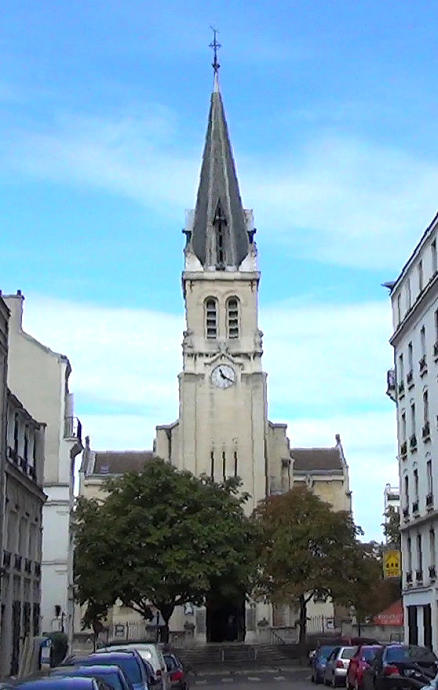
Saint-Lambert de Vaugirard is the work of the architect
Claude Naissant. It is one of the most beautiful
examples of neo-Romanesque architecture in Paris.
Built between 1848 and 1856, its interior offers a
relatively stripped-down universe, including the
magnificent neo-Gothic altarpiece of the axial chapel
with its angels, one of them playing the portable organ
and, in the left transept, a panel which represents
Saint Lambert, surrounded by episodes of his life,
made by Dorothée Sers-Hermann.

C1
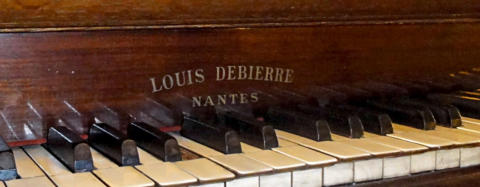
The current organ was built in 1901 by Louis Debierre from
Nantes, replacing a modest 12-stop instrument positioned
behind the chancel from the Merklin firm. Until then, only
an empty case on the gallery—with just a single row of
decorative front pipes—had given the illusion of a grand
organ.
In 1950, Joseph Beuchet-Debierre restored and enlarged it,
expanding from 32 to 35 stops:
•
on the Grand Orgue, a Doublette 2' replaced a 4'
Gambe;
•
on the Positif, they added a Nasard and Tierce;
•
on the Récit, a three-rank Plein Jeu.
Everything else is original (including the pneumatic stop
action).
Maintenance work was carried out by Beuchet-Debierre in
1972, by builders Sébire and Glandaz in 1986, and finally by
Bernard Dargassies in 1999.
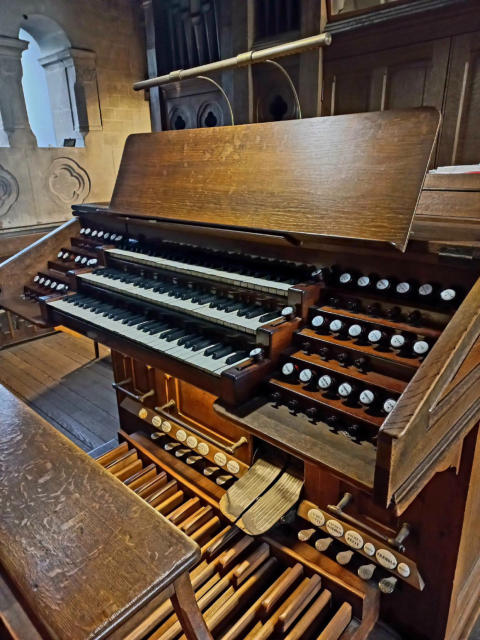
The console—signed by Louis Debierre of Nantes—has
three 56-note manuals and a 30-note concave German-
style pedalboard. It's detached (organist facing the organ)
and hidden behind an oak facade featuring a central clock
and a neo-Gothic pediment matching the case. The
manuals use mechanical key action assisted by a Barker
lever*, mechanical for the pedal and pneumatic for the
stops.
The pipework is of fine quality, almost entirely by Louis
Debierre. A unique Debierre system lets you adjust touch
depth and valve pull right at the keyboards, fixing minor
sticking issues.
(based on a text by Thierry Correard)
In 2026, due to lack of funding from the City of Paris, the
Friends of the Organ association, with help from the Saint-
Lambert parish, has decided to fund some modest worksby
Atelier de Facture d’Orgue concerning:
•
the stop action
•
registration aids
•
the addition of a reed stop on the pedal
This is the only surviving Louis Debierre organ in Paris (aside
from polyphones at the chapel of the Missions Étrangères and
Saint-Honoré-d'Eylau church).
* Debierre's patented version of the Barker lever

In the plan to maintain the cultural heritage of the City of
Paris, this organ is among the instruments, classified as
Historic Monuments, requiring a (partial) restoration.
Restoration issues
The organ of Saint-Lambert-de-Vaugirard was built in
1901 by the Nantes postman Louis Debierre. This
instrument underwent few transformations except a
complete lift in the 1950s carried out by
BeuchetDebierre, then regular maintenance and repair
work. Thus, although some games were transformed or
replaced in the instrument, the organ of the Church of
Saint-Lambert-de-Vaugirard remained quite close to its
original state. As the only significant grandstand
instrument installed by Louis Debierre in Paris, this
instrument has a definite heritage interest, and
characterizes the technique as a major organ factor in
the history of organist technique. For several years, the
association of friends of the organ of Saint-Lambert-de-
Vaugirard (AOSL) wishes, in agreement with its organist
Mr. Dekeister, improvements and an evolution of the
instrument. The financing of this operation would be
provided in part by the patronage generated by the
AOSL. A preliminary study was carried out in July 2013 to
identify organ design work in accordance with the
wishes expressed by users, while ensuring that the
heritage character of the instrument is preserved. As this
instrument is not protected under the Historic
Monuments, the specifications of the operation can be
designed by the City's services.
The chosen program meets the need for improvements
in the operation of the organ (wind stability, reliability of
the mechanics), sufficient flow (installation of a
complementary turbine) and options for the game of the
organist (serious octave of the story on itself, 32' game
at the Pedal and call of the tirasses to the feet in
separate mode). This work may be the subject of three
ordered tranches in order of priority, with some actions
to be carried out in the same instalment.
Call to Patronage: 105.000 euros, exclusive the costs of
mastering the project, which will be taken care of by the City
of Paris.
Source


Titular organist
Olivier Dekeister
Parish website
Videos
Olivier Dekeister
Photos
Organ: David Cassan (facebook)
Church: Vincent Hildebrandt
1901 - Louis Debierre (1)
1950 - Beuchet-Debierre (5)
1972 - Beuchet-Debierre (5)
1986 - Sebire/Glandaz (6)
1999 - Dargassies (6)
2026 - Atelier de Facture d'Orgues Dillenseger (5)
III/35 (31)
mechanical traction (claviers)
traction pneumatique (jeux) -
Stoplist








The organs of Paris


ORGANS OF PARIS © 2026 Vincent Hildebrandt

C1
The current organ was built in 1901 by Louis Debierre from
Nantes, replacing a modest 12-stop instrument positioned
behind the chancel from the Merklin firm. Until then, only an
empty case on the gallery—with just a single row of
decorative front pipes—had given the illusion of a grand
organ.
In 1950, Joseph Beuchet-Debierre restored and enlarged it,
expanding from 32 to 35 stops:
•
on the Grand Orgue, a Doublette 2' replaced a 4' Gambe;
•
on the Positif, they added a Nasard and Tierce;
•
on the Récit, a three-rank Plein Jeu.
Everything else is original (including the pneumatic stop
action).
Maintenance work was carried out by Beuchet-Debierre in
1972, by builders Sébire and Glandaz in 1986, and finally by
Bernard Dargassies in 1999.
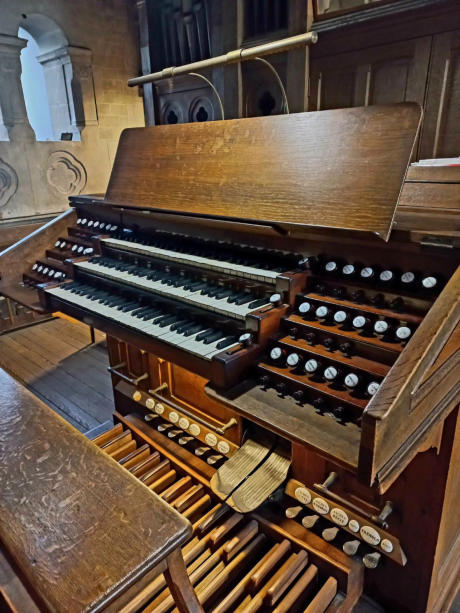
The console—signed by Louis Debierre of Nantes—has three
56-note manuals and a 30-note concave German-style
pedalboard. It's detached (organist facing the organ) and
hidden behind an oak facade featuring a central clock and a
neo-Gothic pediment matching the case. The manuals use
mechanical key action assisted by a Barker lever*, mechanical
for the pedal and pneumatic for the stops.
The pipework is of fine quality, almost entirely by Louis
Debierre. A unique Debierre system lets you adjust touch
depth and valve pull right at the keyboards, fixing minor
sticking issues.
(based on a text by Thierry Correard)
In 2026, due to lack of funding from the City of Paris, the
Friends of the Organ association, with help from the Saint-
Lambert parish, has decided to fund some modest worksby
Atelier de Facture d’Orgue concerning:
•
the stop action
•
registration aids
•
the addition of a reed stop on the pedal
This is the only surviving Louis Debierre organ in Paris (aside
from polyphones at the chapel of the Missions Étrangères and
Saint-Honoré-d'Eylau church).
* Debierre's patented version of the Barker lever

1901 - Louis Debierre (1)
1950 - Beuchet-Debierre (5)
1972 - Beuchet-Debierre (5)
1986 - Sebire/Glandaz (6)
1999 - Dargassies (6)
2026 - Atelier de Facture d'Orgues Dillenseger (5)
III/35 (31)
mechanical traction (claviers)
traction pneumatique (jeux) -
Stoplist


Titular organist
Olivier Dekeister
Parish website
Videos
Olivier Dekeister
Photos
Organ: David Cassan (facebook)
Church: Vincent Hildebrandt